


Hidden Demon : (Low-Density-Lipoprotein Receptor)
- Rithu B S

- Jan 21, 2023
- 2 min read
The low-density lipoprotein receptor protein is made using instructions from the LDLR gene present on chromosome number 19. Low-density lipoproteins (LDLs), the main carriers of cholesterol in the blood, are what this receptor binds to. The body produces cholesterol, a waxy, fatty molecule, and it can also be consumed through foods that contain animals.

The amount of cholesterol in the blood is significantly regulated by low-density lipoprotein receptors. They are especially prevalent in the liver, which eliminates the majority of extra cholesterol from the body. The rate at which cholesterol is eliminated from the bloodstream depends on the quantity of low-density lipoprotein receptors on the surface of liver cells.
Familial hypercholesterolemia is a type of elevated cholesterol that is brought on by mutations in the LDLR gene. In this gene, more than 2,000 mutations have been found. Some of these genetic alterations cause cells to create fewer low-density lipoprotein receptors. The removal of LDLs from the circulation by the receptor is interfered with by other alterations. People who have LDLR gene mutations consequently have extremely high blood cholesterol levels. Excess cholesterol is improperly accumulated in tissues like the skin, tendons, and arteries that supply blood to the heart as it travels through the bloodstream (coronary arteries). A person's chance of suffering a heart attack is significantly increased by a buildup of cholesterol in the walls of the coronary arteries.
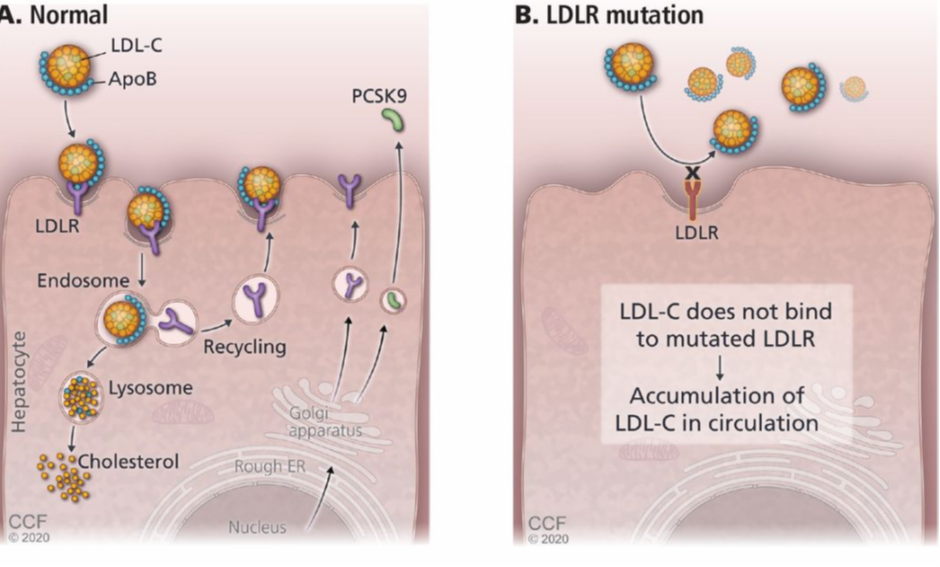
The majority of patients with familial hypercholesterolemia receive one LDLR gene copy that has been changed from one affected parent and one normal copy from the other parent. These cases are linked to a higher chance of developing early heart disease, which commonly manifests in the 40s or 50s. Rarely, two mutant copies of the LDLR gene are present at birth in a person with familial hypercholesterolemia. This circumstance arises when a person has two afflicted parents, each of whom transmits one gene with an altered copy. A more severe form of hypercholesterolemia that typically manifests in childhood is caused by the presence of two LDLR gene mutations.
Synonyms of LDLR genes: FHC , LDL receptor , LDLCQ2 , LDLR_HUMAN , Low density lipoprotein (LDL) receptor , low density lipoprotein receptor (familial hypercholesterolemia).

Tests Listed in Genetic Testing Registry: https://www.ncbi.nlm.nih.gov/gtr/all/tests/?term=3949[geneid]&_ga=2.23529651.844661568.1674315765-1891140766.1661258835


Great piece of writing!