


All you need to know about liver cirrhosis
- Shaziya J

- Mar 30, 2023
- 2 min read
Liver Cirrhosis is the term used to refer to the process of healthy liver cells being replaced by scarred tissue cells. Also referred to as fibrosis, it occurs as a result of liver damage occurring over a prolonged period of time. The liver, at this stage is permanently damaged and the scarring interferes with normal liver functions to a degree where the liver is bound to fail. The scar tissue hinders blood flow through liver and slows down its ability to process nutrients, hormones, drugs and natural toxins(poisons). It also degrades the liver’s capability to synthesize proteins and other vital substances. Cirrhosis is also known as late-stage liver disease, which implies there’s no reversibility possible. It’s of two known types: Compensated and Decompensated. Compensated cirrhosis implies being cirrhosis positive but being asymptomatic at the moment. Decompensated cirrhosis implies liver being degraded to point where the symptoms are painfully visible.

The disease manifests itself in a variety of ways which include: Portal Hypertension, Appetite loss, Nausea, Weight loss. As the disease progressively worsens, the symptoms which are more commonly seen include easy bruising and bleeding, jaundice ( yellow tinting of the skin or white of the eyes) ,itchy skin, edema in legs, hand or feet, spider like blood vessels that surround small red spots on skin (Telangiectasias), abdominal pain.
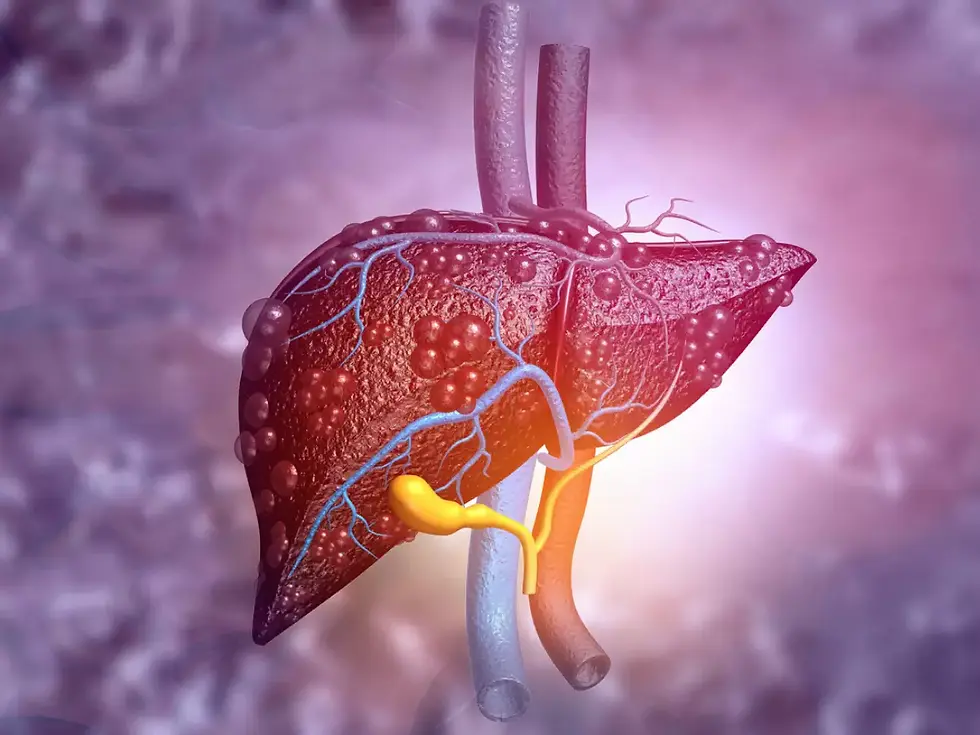
Wide ranging causes of the disease include long term consumption of alcohol, chronic viral infections of the liver (Hepatitis B or C) ,Steatohepatitis which is fatty liver associated with obesity rather than alcohol abuse. Inherited diseases such as Alpha-1 antitrypsin deficiency (buildup of abnormal protein in liver) ,Hemochromatosis (Excess iron stored in liver) ,Wilson’s disease (Excess copper stored in liver) are all also capable of leading to cirrhosis of the liver.

Diagnosis is done via performing one or more tests such as a physical exam in which a doctor would look out for yellowing of the skin, redness of the palm, enlarged firmer feeling of the abdomen, bumpy texture in lower edge of liver etc. A blood test may also be prescribed which would look for abnormalities in the levels of liver enzymes, albumins, creatinine, presence of autoantibodies (indicative of autoimmune hepatitis or biliary cirrhosis).Imaging tests such as CT and MRI scans are reliable to measure and visualize stiffness of the liver and thereby infer the degree of disease progression. Either of two endoscopies can be prescribed: Endoscopic Retrograde Cholangiopancreatography to detect bile duct problems or Upper endoscopy to detect enlarged veins (varices) in the abdominal region. Biopsy involving a sample of liver tissue being extracted and investigated is another well-developed technique.

Though not curable, there a number of ways to manage symptoms which include lowering salt content in diet, intake of diuretics which reduce swelling and edema in body, using anti-itch creams, quitting smoking, exercising to prevent muscle loss and losing weight if obese. These methods along with effective lifestyle changes can indeed make surviving with cirrhosis optimistically better.
References:
Comments